
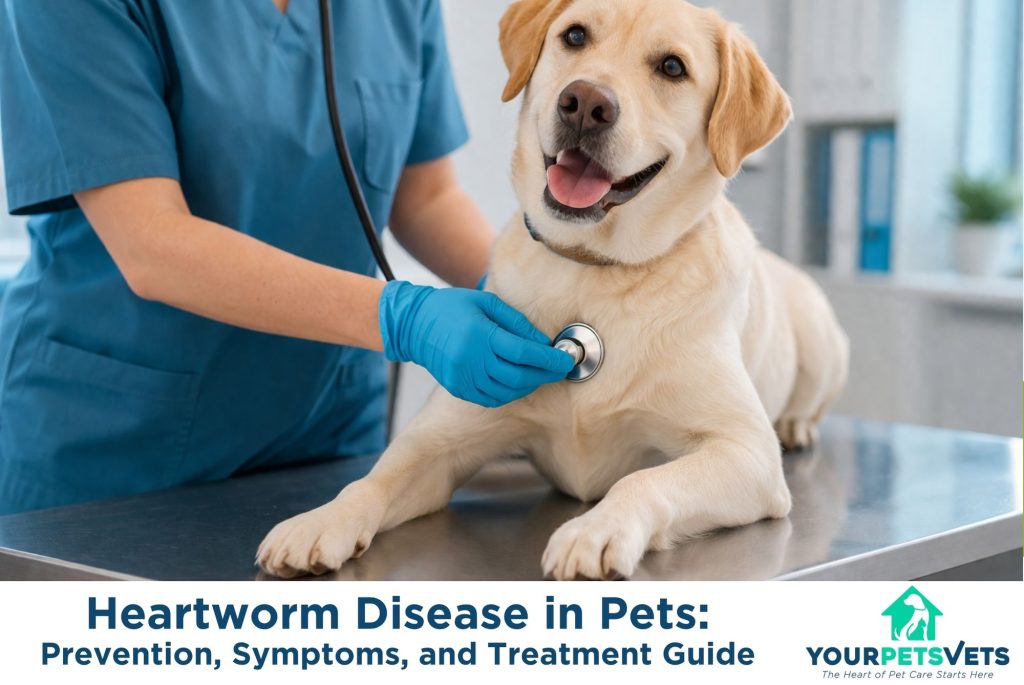
Heartworm disease is a serious and potentially fatal condition that affects pets, especially dogs and cats. At Your Pets Vets, we are committed to educating pet owners in Pembroke Pines, FL, and beyond about the importance of heartworm prevention and early treatment. This comprehensive guide will help you understand how heartworm disease develops, how to protect your pet, and what to do if your pet is diagnosed.
What Is Heartworm Disease?
Heartworm disease is caused by a parasitic worm called Dirofilaria immitis. These worms are transmitted through the bite of infected mosquitoes. Once inside your pet’s body, the larvae mature into adult worms that live in the heart, lungs, and blood vessels, causing severe damage over time.
How Do Pets Get Heartworms?
Heartworms are spread exclusively through mosquito bites. When a mosquito bites an infected animal, it picks up microscopic larvae (microfilariae). These larvae develop within the mosquito and are then transmitted to another pet when the mosquito bites again.
Because mosquitoes are common in Florida year-round, pets in Pembroke Pines are at particularly high risk.
Symptoms of Heartworm Disease
In Dogs:
- Persistent cough
- Fatigue after moderate activity
- Decreased appetite
- Weight loss
- Difficulty breathing
- Swollen abdomen (in advanced cases)
In Cats:
- Coughing or asthma-like symptoms
- Vomiting
- Loss of appetite
- Weight loss
- Sudden collapse or death (in severe cases)
Cats may show subtle or no symptoms, making regular veterinary care even more critical.
Why Prevention Is Essential
Heartworm disease is much easier—and far less expensive—to prevent than to treat. Preventative medications are safe, effective, and typically administered monthly or annually depending on the product.
Benefits of prevention include:
- Avoiding costly and risky treatment procedures
- Protecting your pet from irreversible organ damage
- Peace of mind for pet owners
At Your Pets Vets, we strongly recommend year-round heartworm prevention for all pets.
Heartworm Prevention Options
Your veterinarian may recommend one of the following:
- Monthly oral medications
- Monthly topical treatments
- Injectable prevention (lasting up to 12 months)
Each option is tailored to your pet’s lifestyle, age, and health status.
Heartworm Testing
Before starting prevention, pets must be tested for heartworms. Annual testing is recommended even if your pet is on preventative medication to ensure early detection.
Testing is quick, simple, and can be done during your pet’s routine wellness visit.
Heartworm Treatment for Dogs
If your dog tests positive, treatment is available but involves a carefully managed process:
- Stabilization and evaluation
- Administration of medications to kill adult worms
- Strict exercise restriction during treatment
- Follow-up testing to confirm success
Treatment can take several months and requires close veterinary supervision.
Heartworm in Cats: What You Need to Know
There is currently no approved treatment to eliminate adult heartworms in cats. Care focuses on managing symptoms and preventing further infection. This makes prevention absolutely critical for cats.
Protecting Your Pet in Pembroke Pines, FL
Due to Florida’s warm climate, mosquitoes—and therefore heartworm risk—are present year-round. Consistent prevention and regular veterinary visits are the best ways to protect your pet.
Frequently Asked Questions (Q&A)
Q: Can indoor pets get heartworms?
A: Yes. Mosquitoes can enter homes, putting indoor pets at risk.
Q: How often should my pet be tested?
A: Dogs should be tested annually. Cats may also be tested based on your veterinarian’s recommendation.
Q: Are heartworm preventatives safe?
A: Yes, when prescribed by a veterinarian. They are widely used and highly effective.
Q: What happens if I miss a dose of prevention?
A: Contact your veterinarian immediately. Your pet may need testing before restarting prevention.
Q: Is heartworm disease contagious between pets?
A: No. It requires a mosquito to spread the disease.
Q: How long does treatment take for dogs?
A: Treatment typically takes several months and requires restricted activity.
Q: Can heartworm disease be cured?
A: Dogs can be treated successfully, especially when diagnosed early. In cats, management is supportive rather than curative.
Schedule Your Pet’s Heartworm Test or Prevention Plan Today
Protect your pet from heartworm disease with expert care from Your Pets Vets. Our experienced veterinary team is here to help you choose the best prevention and treatment options.
Contact Information
Your Pets Vets
508 N University Drive
Pembroke Pines, FL 33024
Phone: (954) 271-2703
Website: yourpetsvets.com
Request An Appointment: https://yourpetsvets.com/appointments/