
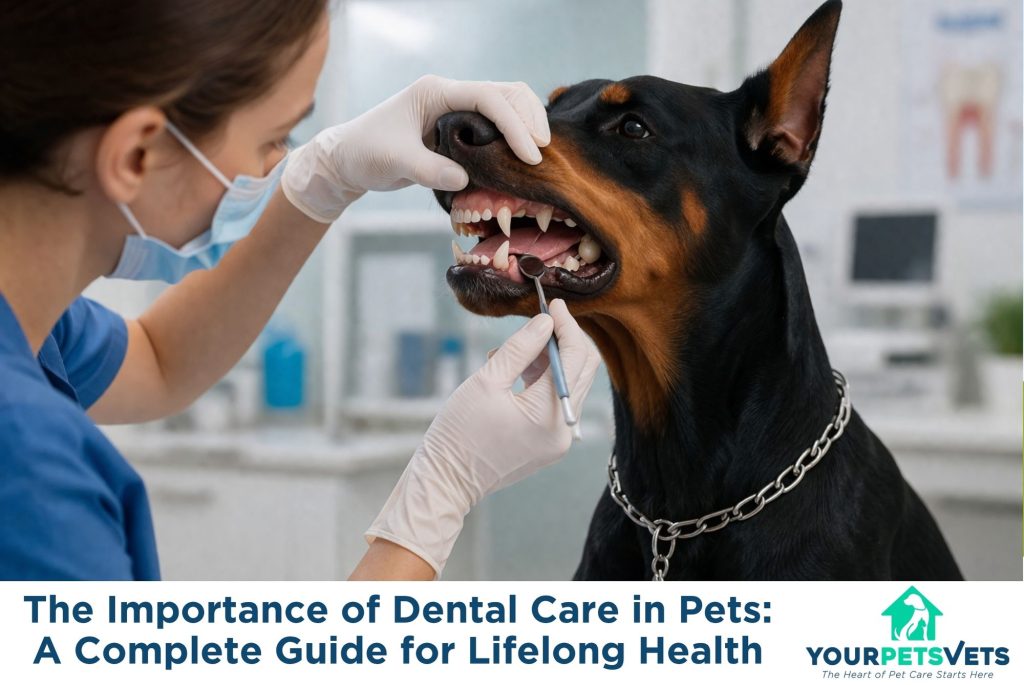
When it comes to caring for your pet, dental health is often overlooked—but it’s one of the most important aspects of their overall well-being. At Your Pets Vets, we believe proactive dental care can add years to your pet’s life, prevent painful conditions, and improve their quality of life.
In this comprehensive guide, we’ll explain why dental care matters, how to recognize signs of dental disease, and what you can do to keep your pet’s smile healthy.
Why Dental Care Matters for Pets
Just like humans, pets can develop plaque, tartar, and gum disease. In fact, over 80% of dogs and 70% of cats show signs of dental disease by age three.
Poor oral health doesn’t just affect your pet’s mouth—it can lead to serious systemic issues, including:
- Heart disease
- Kidney disease
- Liver complications
- Chronic pain and infection
Regular dental care helps prevent these issues and supports your pet’s long-term health.
Common Dental Problems in Pets
1. Periodontal Disease
The most common dental issue in pets, caused by plaque buildup that leads to inflammation and infection.
2. Tooth Decay & Loss
Untreated dental disease can result in loose or missing teeth.
3. Bad Breath (Halitosis)
Often the first noticeable sign of dental problems.
4. Oral Infections
Bacteria can spread from the mouth into the bloodstream.
Signs Your Pet May Have Dental Issues
Keep an eye out for these warning signs:
- Persistent bad breath
- Yellow or brown buildup on teeth
- Red, swollen, or bleeding gums
- Difficulty eating or chewing
- Pawing at the mouth
- Drooling excessively
- Behavioral changes (irritability, lethargy)
If you notice any of these symptoms, it’s important to schedule a veterinary dental exam promptly.
The Benefits of Regular Dental Care
Consistent dental care offers major advantages:
- Prevents painful dental diseases
- Improves overall health and longevity
- Eliminates bad breath
- Reduces risk of costly treatments later
- Enhances your pet’s comfort and happiness
Professional Dental Cleanings vs. At-Home Care
Professional Cleanings
Veterinary dental cleanings are essential and include:
- Comprehensive oral exam
- Scaling and polishing
- X-rays (if needed)
- Treatment of underlying issues
At-Home Care
Daily or weekly maintenance helps prevent buildup:
- Brushing your pet’s teeth
- Dental chews and treats
- Water additives
- Prescription dental diets
A combination of both professional and at-home care provides the best results.
How to Care for Your Pet’s Teeth at Home
Here are simple steps you can take:
1. Brush Regularly
Use a pet-safe toothbrush and toothpaste (never human toothpaste).
2. Provide Dental Chews
Choose veterinarian-approved products that reduce plaque.
3. Use Dental Rinses or Additives
These help control bacteria in your pet’s mouth.
4. Schedule Routine Exams
Annual or biannual checkups are critical.
Why Choose Your Pets Vets for Dental Care?
At Your Pets Vets, we provide compassionate, comprehensive dental care tailored to your pet’s needs. Our team uses advanced technology and gentle techniques to ensure a safe and comfortable experience.
We focus on prevention, early detection, and effective treatment—so your pet can enjoy a healthier, happier life.
Frequently Asked Questions (Q&A)
Q: How often should my pet have a dental cleaning?
A: Most pets benefit from a professional cleaning once a year, but some may need more frequent care depending on their condition.
Q: Can I use human toothpaste on my pet?
A: No. Human toothpaste contains ingredients that can be toxic to pets. Always use pet-specific toothpaste.
Q: What happens if dental disease is left untreated?
A: It can lead to pain, tooth loss, infections, and serious health issues affecting vital organs.
Q: Are dental treats enough to keep my pet’s teeth clean?
A: Dental treats help, but they are not a substitute for brushing and professional cleanings.
Q: Is anesthesia safe for dental cleanings?
A: Yes. Veterinary teams carefully monitor pets during procedures to ensure safety.
Q: How can I tell if my pet is in dental pain?
A: Signs include reduced appetite, chewing on one side, drooling, or behavioral changes.
Q: At what age should dental care start?
A: Dental care should begin early—ideally during puppy or kitten stages—to build healthy habits.
Contact Your Pets Vets
Your Pets Vets
508 N University Drive
Pembroke Pines, FL 33024
📞 Phone: (954) 271-2703
🌐 Website: yourpetsvets.com
📅 Request an Appointment: https://yourpetsvets.com/appointments/