
Your Pets Vets | Pembroke Pines, FL
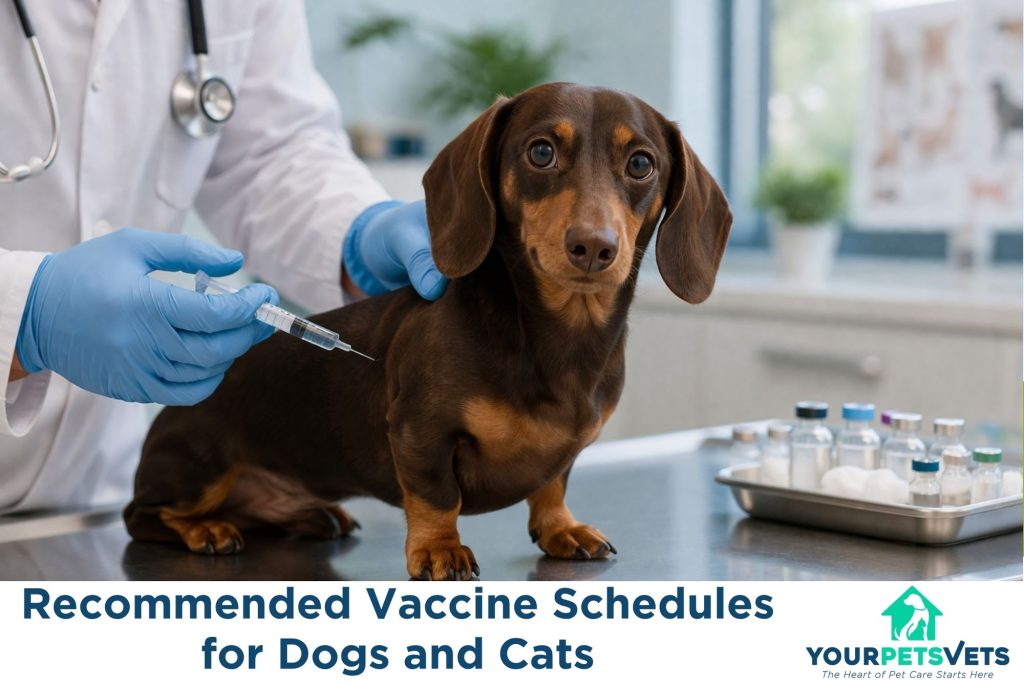
Vaccinations are one of the most important ways to protect your pet’s health, prevent the spread of disease, and ensure a long, happy life. At Your Pets Vets, we believe in providing personalized, evidence-based vaccination schedules tailored to your pet’s lifestyle, age, and risk factors.
This comprehensive guide will walk you through recommended vaccine schedules for dogs and cats, explain core vs. non-core vaccines, and answer common questions pet owners have about immunizations.
Why Vaccinations Matter for Pets
Vaccines help your pet’s immune system recognize and fight harmful viruses and bacteria before they can cause serious illness. Many diseases prevented by vaccines are highly contagious, potentially fatal, and expensive to treat.
Routine vaccinations:
- Protect your pet from life-threatening diseases
- Prevent outbreaks in the community
- Are often required for boarding, grooming, and travel
- Help avoid costly emergency treatments
Core vs. Non-Core Vaccines
Core Vaccines
These are essential for all pets, regardless of lifestyle.
For Dogs:
- Rabies
- Distemper
- Parvovirus
- Adenovirus (Hepatitis)
For Cats:
- Rabies
- Feline Viral Rhinotracheitis (Herpesvirus)
- Calicivirus
- Panleukopenia (FVRCP combination vaccine)
Non-Core Vaccines
These are recommended based on your pet’s environment, lifestyle, and risk factors.
For Dogs:
- Bordetella (kennel cough)
- Leptospirosis
- Lyme disease
- Canine influenza
For Cats:
- Feline Leukemia (FeLV)
- Chlamydia
- Bordetella
At Your Pets Vets, we evaluate your pet’s daily activities, travel habits, and exposure risks to determine which non-core vaccines are appropriate.
Recommended Puppy Vaccination Schedule
Puppies are especially vulnerable to disease, so early and consistent vaccinations are critical.
6–8 Weeks:
- Distemper, Parvovirus (DHPP)
10–12 Weeks:
- DHPP booster
- Optional: Bordetella
14–16 Weeks:
- Final DHPP booster
- Rabies vaccine
12–16 Months:
- Heartworm test
After 1 Year:
- DHPP every 1–3 years
- Rabies every 1–3 years (based on local laws)
- Non-core vaccines annually (if needed)
Recommended Kitten Vaccination Schedule
Kittens also require a series of boosters to build strong immunity.
6–8 Weeks:
- FVRCP (core combination vaccine)
10–12 Weeks:
- FVRCP booster
- FeLV (if at risk)
14–16 Weeks:
- Final FVRCP booster
- Rabies vaccine
12 Months:
- FVRCP booster
- Rabies booster
- FeLV booster (if applicable)
Adult Cats:
- FVRCP every 1–3 years
- Rabies every 1–3 years
- FeLV annually for at-risk cats
Adult Dog Vaccination Schedule
After the initial puppy series, adult dogs require regular boosters to maintain protection.
Annually or Every 3 Years:
- DHPP booster
- Rabies booster (depending on state law)
Optional (Annual):
- Bordetella
- Leptospirosis
- Lyme disease
- Canine influenza
Your dog’s lifestyle—such as boarding, hiking, or socializing—will determine which vaccines are recommended.
Adult Cat Vaccination Schedule
Adult cats need ongoing protection, especially if they spend time outdoors or interact with other animals.
Every 1–3 Years:
- FVRCP booster
- Rabies vaccine
Annually (if at risk):
- Feline Leukemia (FeLV)
Factors That Influence Vaccine Recommendations
At Your Pets Vets, we don’t take a one-size-fits-all approach. Vaccine schedules may vary based on:
- Age and health status
- Indoor vs. outdoor lifestyle
- Travel and boarding frequency
- Exposure to other animals
- Local disease risks in Pembroke Pines, FL
Signs of Vaccine Reactions (Rare but Important)
Most pets tolerate vaccines very well. However, mild side effects may include:
- Slight fever
- Reduced appetite
- Temporary swelling at injection site
Rare but serious reactions include:
- Facial swelling
- Vomiting
- Difficulty breathing
If you notice unusual symptoms, contact Your Pets Vets immediately.
Frequently Asked Questions (Q&A)
How often does my pet need vaccines?
Most adult pets require boosters every 1–3 years, depending on the vaccine type and local regulations.
Are vaccines safe for pets?
Yes. Vaccines are thoroughly tested and monitored for safety. Serious side effects are rare.
Can indoor pets skip vaccines?
No. Even indoor pets can be exposed to diseases through people, other animals, or accidental escapes.
What happens if my pet misses a vaccine?
Your veterinarian may recommend restarting or boosting the series to ensure proper immunity.
Are there alternatives to vaccination?
Vaccination is the most effective prevention method. In some cases, titer testing may be discussed, but it does not replace all vaccines.
Why are rabies vaccines required by law?
Rabies is a fatal disease that can spread to humans. Vaccination protects both pets and public health.
Do senior pets still need vaccines?
Yes, but schedules may be adjusted based on overall health and risk factors.
How do I know which non-core vaccines my pet needs?
Your veterinarian will evaluate your pet’s lifestyle and environment to make personalized recommendations.
Partner with Your Pets Vets for Preventive Care
Keeping your pet up to date on vaccinations is one of the simplest and most effective ways to protect their health. At Your Pets Vets, we provide customized vaccine plans and compassionate care tailored to your pet’s unique needs.
Contact Information
Your Pets Vets
508 N University Drive
Pembroke Pines, FL 33024
Phone: (954) 271-2703
Website: https://yourpetsvets.com
Request An Appointment: https://yourpetsvets.com/appointments/